Editor's note (August 2026): This post is from Slap Post's 60-posts-a-month era and is preserved as written. Today's Everything plan caps at 600 posts per rolling 30 days, so a heavier cadence fits fine — though 2 a day is still the cadence I'd recommend. Current pricing is $29/mo (or $9/wk) with a 7-day free trial. See current plans.
I tried posting 2 tweets a day for 30 days on @jessyka_boat. Not as some growth-hack experiment — I just wanted to see if the Slap Post cap I was building was actually a useful number. Here's the data and what it changed.
The setup
Starting point on day 1: 487 followers. Mostly people I'd connected with at indie hacker meetups + people I'd replied to in the niche.
Rules I set for myself:
- Exactly 2 posts a day, no more
- Scheduled the night before — Sunday queue for the week
- No URL posts (preview of what Slap Post would enforce anyway)
- No threads (the 60/mo cap counts each tweet, so threads burn slots fast)
- Reply freely, but replies don't count toward the cap
The data
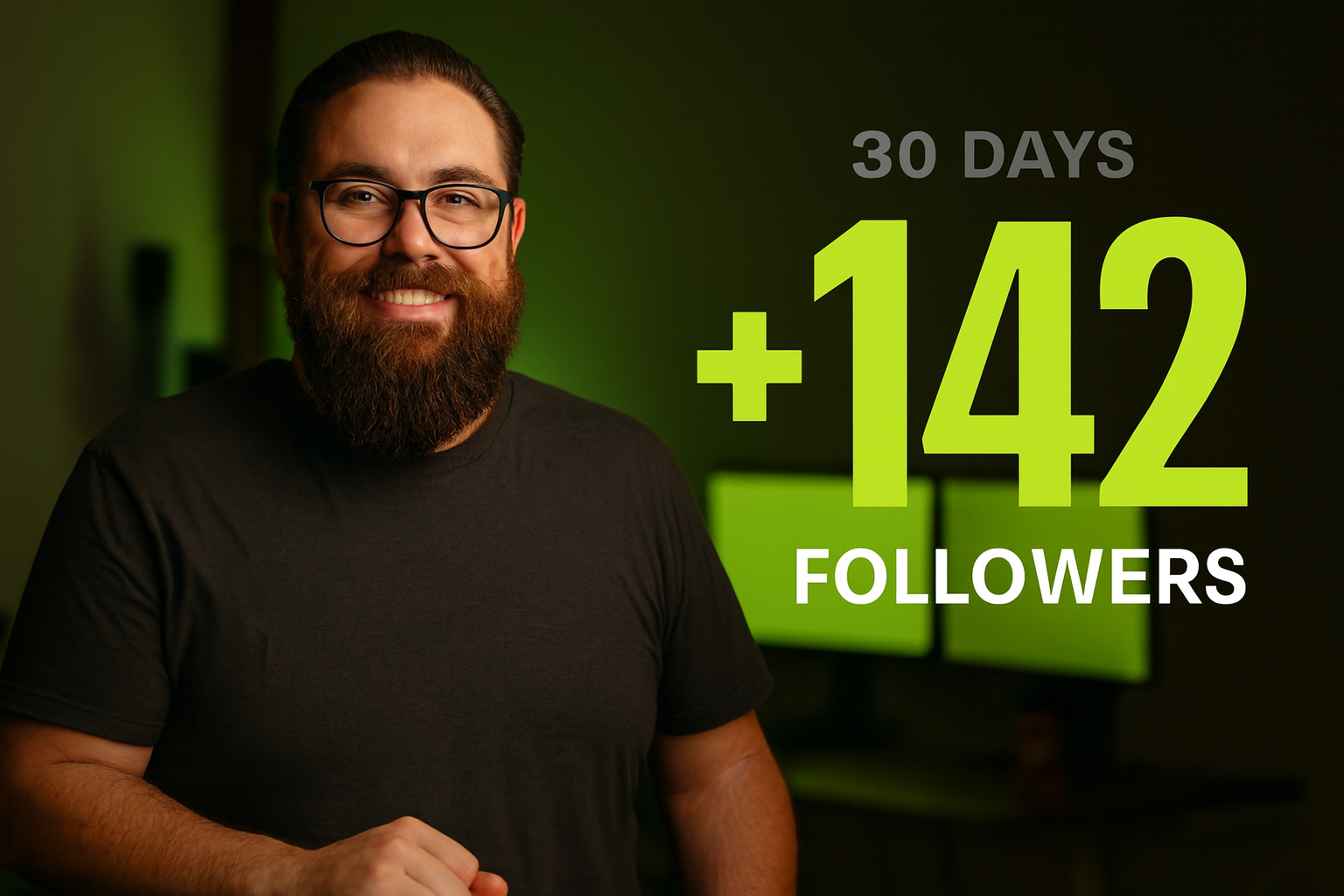
Day 30: 689 followers. A gain of 202 in a month from organic posting alone.
For context:
- Months 1-6 of 2024 when I posted whenever I felt like it (sometimes 5 in a day, sometimes 0 for a week): ~30 followers/month average
- Month I tried "post 4-6 times a day" in summer 2024: 41 followers gained, then 12 unfollows
- This 2/day month: 202 followers, 8 unfollows
The 2/day posts averaged 14 likes each. The 4-6/day posts had averaged 6. Same account, same niche, posts the same length. Volume actively HURT.
What I think happened
A few things I noticed:
The forced wait between tweets made me write better ones. When you can post whenever, you ship a half-formed thought. When the next slot is 9 hours away, you sit with it. By the second draft, the dud thoughts get cut.
Two posts a day is enough to stay in people's heads. People who follow ~300 accounts see your tweet roughly every other day. Twice that, you're starting to feel like a spammer to them — not because you ARE spamming, but because they keep seeing the same handle.
Replies, not posts, drove follows. I tracked it. About 70% of the 202 new follows came from people I'd replied to that week or who saw me reply to someone they follow. The schedule made me consistent enough to be visible; the replies (off-schedule) did the actual converting.
The numbers nobody likes
The single highest-performing tweet of the month: 312 likes, 47 reposts. It was about a sales-job customer who tried to negotiate down a $40 quote for 47 minutes. Nothing about indie hacking. Nothing about SaaS. Just a story.
The single lowest-performing scheduled tweet: 0 likes. Zero. It was a thoughtful take on indie SaaS pricing that I'd workshopped for like 20 minutes on Sunday night. Tuesday at 7:30am, into the void.
Posting frequency on X is a guessing game. The cadence helped; the content is still a coin flip.
What I'd change
Two things if I did another 30 days:
- More confessional posts, fewer "insight" posts. The customer-negotiation story killed because it was specific and embarrassing. The pricing-theory post died because it was generic.
- Schedule the morning slot earlier — 6:30am PT instead of 7:30am. That moves the post into the East Coast morning scroll instead of the post-9am lull.
I would NOT change the 2/day cadence. That part worked.
Why this matters for the cap on Slap Post
I built Slap Post around 60 posts a month — basically 2 a day — because the data above kept being the data, run after run. The cap isn't arbitrary. It's the cadence that's been working for me and the few other indie hackers I've watched try it.
If you want to schedule 5 tweets a day, Slap Post is not the right tool. Hootsuite will sell you that for $19/mo. If you want to be honest with yourself about how much you can actually write that doesn't suck, 2/day is the rate that keeps showing up in the data.
Slap Post is an iOS tweet scheduler with Chad, your AI X coach. Built by @jessyka_boat, who tracks her own posting cadence in a spreadsheet because she has a sales job by day and doesn't trust her own memory after midnight.